Yesterday I was speaking to one of my coworkers about a
book that I've been reading recently. Mind you, he's an incredibly intelligent and devout Mormon, but he's an intrinsic Christian that is generally disg

usted with many of his fellow members for their extrinsic qualities.
In the introduction and first chapter of this book it discusses the nature of how the Greeks percieved and acknowledged their gods. The author specifically states that they were anthropormorphic and lacked the eventuality of mortality, hence they were fundamentally inferior to humans. They lacked the ability to risk because they could not lose everything as a result of their actions. More specifically, their lives since they were immortal.
The idea that they only meddled and did what they did out of boredom instead of actually striving to better themselves or out of duty is appealing to me for some reason.
I told my co-worker that I liked the idea of anthropomorphic gods over the ultimate godhead/god that had reached perfection in all ways.
By god he gave me the weirdest look. He was truly perplexed that I would take an imperfect and passionate god over a perfect god.
Truly, what is perfection?
To me, seeing and acknowledging that a god/goddess had human
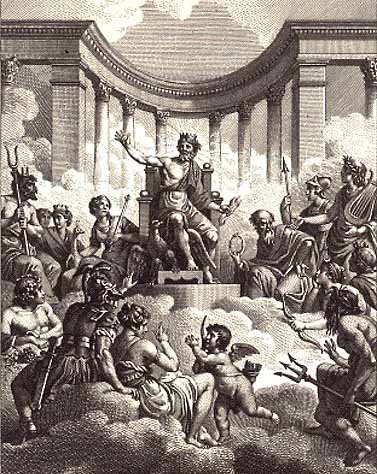
qualities and made mistakes is easier to inspire someone to become a better human being. It's more incredible, to me, to compete and to openly acknowledge a likeness unto a divine figure than it is to try to relate to a figure that you've been told has reached complete perfection that asks not to be questioned.
A lack of inquiry tends to create great ennui for me.
So instead of having someone lead by example, having someone who is still quite openly capable of faults and passion seems to inspire greater qualities.
I guess I don't understand the appeal in forever, eternity, and striving for ultimate perfection because I don't see how perfection is even possible on all planes and levels of existence for every human being.
What is perfection for me?
What was perfection for Hitler?
What is perfection for the guy that made my coffee this morning?
What was perfection for Helen Keller?
What is perfection for that random guy I sat next to on the bus in Italy?
What is perfection for you?
Last year I had the privilidge of speaking to
Dr. Jennifer Hecht and watching her interact with a devout member of the LDS faith. She didn't understand the concept of wanting forever and perfection

either. The woman kept insisting that she would eventually live forever with everyone she loved with a perfect body. However, upon questioning of what that meant she couldn't answer with anything beyond "I have trust in my living prophet and his apostles that they know the answer". All she knew is that living a certain standard set by men who listened to a perfect god meant eternal happiness, perfection of body (without flaws or health issues), and the company of everyone who had ever existed or will exist. Dr. Hecht replied by asking if she would itch forever or sneeze forever, or even if she'd have little to nothing to say for eternity.. What does that mean?
This just makes me think of that episode of Star Trek the Next Generation where a member of the Q had become so bored with eternity and having ultimate powers that he willed himself human and committed suicide just to experience something new.
The more and more I read into this, the more appealing it is to me to recognise and acknowlege someone with flaws over someone who doesn't.. it's just unnatural to me instinctually.
To strive and give it your best the only time you have to do it, that appeals to me. To risk and give everything you have into your life, the only one you'll ever get, that is insipiring to me.
What is the appeal of perfection? Avoiding embarassment? Avoiding irritation? Avoiding what exactly? Or is it even avoiding? What does this achieve?


